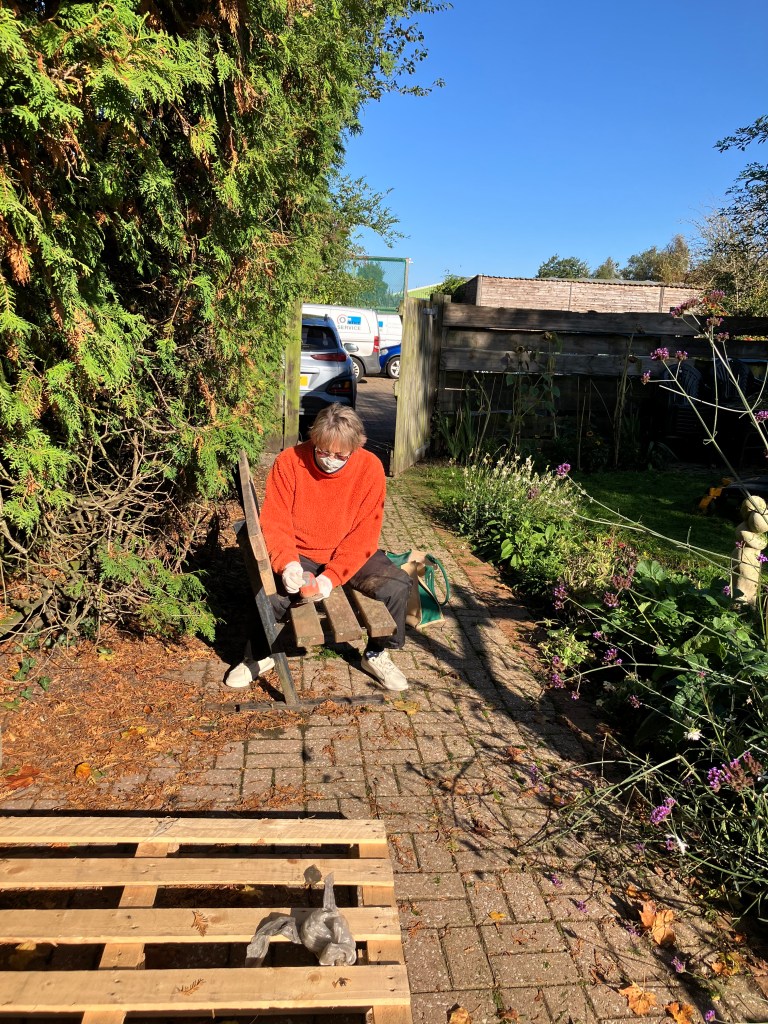
Greenwell uses Social and Therapeutic Horticulture (STH), a system of support which has been developed by Thrive, the leading horticultural therapy charity in the UK and its partner organisation, Trellis Scotland. STH is a process where trained practitioners work with plants and people to improve a person’s physical and psychological health, communication and thinking skills. The health and well-being benefits of horticulture are well-documented and include:
- Better physical health (exercise and strengthening muscles improves mobility)
- Improved mental health (through a sense of purpose, hope and achievement)
- Opportunities to connect with others (reducing feelings of isolation and loneliness)
- Opportunities to learn new skills (improving confidence and self-fulfilment)
- Increased connection to nature (which itself is documented to improve mental health).

STH tailors gardening activities to meet the needs of each person through the active role of the practitioner. The garden is used as a safe and secure place to develop a person’s ability to mix socially, make friends and learn practical skills to help them be more independent.
Using gardening tasks and the garden itself, STH practitioners build a set of activities for each gardener to support their particular health needs and work on certain goals they want to achieve.
STH is a person-centred intervention and can be used to benefit people experiencing different situations, including:
- As part of a rehabilitation process to help people recover and ‘find their feet again’ after an illness or difficult time in their lives;
- To help people recover from a range of health conditions;
- To slow down the deterioration of a degenerative disease;
- To learn new skills which could lead to employment or being more active in the community;
- To improve people’s quality of life and support healthier lifestyles.
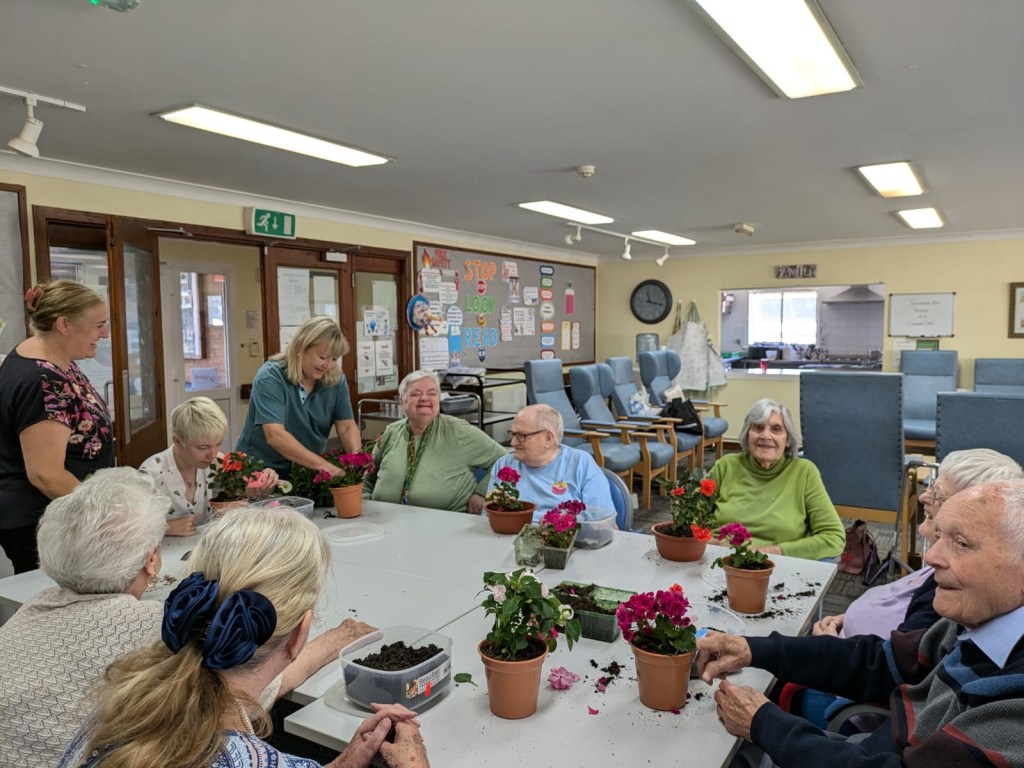
Active processes used in STH
The benefits of STH come from 3 active processes:
- Time in nature
- Time being occupied and active
- Time in a positive social environment
Although these processes work separately and are potentially all of equal value, they are often interdependent and mutually supportive. The skills of the STH practitioner is to manage and adapt the processes to suit the needs of each individual participant.

Horticultural therapy and examples of its impact
Here are some common experiences and tasks which we offer in our gardens and activity sessions, with explanations about the positive effects of these and how they benefit particular groups of people. Of course, most people benefit from taking part in these, regardless of whether they fit into the target groups. Gardening is good for everybody!

| Activity/experience | Impacts | Specific target groups who benefit |
Spending time outdoors in the garden in nature | Reduces anxiety and enables ‘attention restoration’ (having an improved level of focus) Enables feelings of calmness and tranquillity through ‘being away’ from sources of stress and in a safe space, promoting restoration and recovery Enables interaction with the natural world and seasonal changes, linking to our innate connection to nature Enables engagement with sensory stimulation provided by interaction with plants (smell, touch, sight), which promotes relaxation and mindfulness. | Participants with mental health problems, who have experienced bereavement, who are carers for a family member or friend, who have a long term illness or who suffer from chronic pain and who have learning difficulties. |
| Interacting and working with others to accomplish garden tasks | Reduces feelings of isolation Enables participants to be part of a team Enables communication and conversation with practitioners and other participants Builds a sense of community with others in nurturing plants and carrying out garden tasks | Participants who have learning difficulties which impact on communication skills (autism, ADHD), who are experiencing loneliness, who have mental health problems. |
| Weeding by hand and hoeing | Develops fine and gross motor skills Improves physical fitness, strength, balance and co-ordination (hoeing) Enables participants to learn correct use of tools Improves self esteem: the task produces a satisfying result Direct connection with plants and soil boosts serotonin Develops plant recognition and knowledge Enables following a sequence | Participants with learning difficulties, mental health problems, long term illnesses, are experiencing loneliness, have suffered bereavement |
| Sowing seeds, pricking out and potting on seedlings | Follow a sequence Fine motor skills Nurture of young plants Develops understanding of the circle of life Develop independence Reconnect to previous experience and link to memory, reduce agitation (Older adults) | Participants with learning difficulties, mental health problems, long term illnesses; older adults including with dementia or Alzheimer’s |
| Mulch borders | Follow a sequence Gross motor skills leading to improved physical fitness and mood Develop understanding of how to maintain a garden and suppress weeds Teamwork | Participants with learning difficulties, mental health problems |
| Watering | Physical activity involving gross motor skills Understand needs of plants Sensory aspects of feeling, watching and listening to water Follow a sequence Develop independence | Participants with learning difficulties, mental health problems |
| Rake and sweep leaves | Physical activity involving gross motor skills Care and use of tools Follow a sequence Follow instructions Develop understanding and awareness of the seasons Understand life cycles, rotting process, composting Improve self esteem – task makes an immediate clear difference Teamwork Develop independence | Participants with learning difficulties, mental health problems, who are experiencing loneliness or loss of a loved one |
| Pruning | Fine motor skills Awareness of need for care with secateurs and spiky plants Follow a sequence Understand plants and their needs Improve self esteem, make a clear difference in a short time | Participants with learning difficulties, mental health problems, long term illnesses, are experiencing loneliness, have suffered bereavement |
| Make garden from succulents in a pot | Fine motor skills Understand the needs of different plants Sensory quality of soil, gravel, plants Improve self esteem by creating something living and attractive | Older adults including those with dementia/Alzheimer’s, Participants with learning difficulties, mental health problems, long term illnesses, are experiencing loneliness, have suffered bereavement |
| Harvest vegetables | Gross and fine motor skills Learn about different parts of plants (edible, not edible) Learn to use tools How to use vegetables to prepare something tasty and healthy Learn about how to store vegetables safely | Participants with mental health problems, who have experienced bereavement, who are carers for a family member or friend, who have a long term illness or who suffer from chronic pain and who have learning difficulties. |
| Take herb cuttings | Fine motor skills Follow a sequence Learn about propagation of plants and how they grow Sensory experience of handling and smelling herbs | Participants with mental health problems, who have experienced bereavement, who are carers for a family member or friend, who have a long term illness or who suffer from chronic pain and who have learning difficulties. |
| Wash pots | Follow a sequence Learn about plant diseases and the importance of hygiene Sensory use of warm soapy water Job satisfaction and self esteem Teamwork | Participants with mental health problems, who have experienced bereavement, who are carers for a family member or friend, who have a long term illness or who suffer from chronic pain and who have learning difficulties. |
| Making cards using pressed flowers | Fine motor skills Creating cards to give to someone else: preparing a gift Sensory touch of flower petals, glue, card, colours Making independent choices in selecting flowers and creating the card | Older adults including those with dementia/Alzheimer’s, Participants with learning difficulties, mental health problems, long term illnesses, are experiencing loneliness, have suffered bereavement |
